


This story is from our 10th issue, themed “HOLDOUTS”—about the things we hold onto, and hold out for. Read the editor’s note here. Also in this issue: “You Have to Give Up What You Have to Get What You Need,” by Jesse Dorris.
Hi there, housemates,
This week, in the spirit of holdouts, we’re taking a closer look at a maker who’s working with possibly the world’s most ancient medium: stone. I’ve had the chance to meet a few masons and sculptors over the past year, and each time, I’ve been fascinated by the sheer physicality of the work they do. While most of the world is looking to make things easier, smoother, and faster, these folks remain doggedly attached to the hard stuff (literally). Below, Ben Dreith takes us inside the studio of Ethan Stebbins, a Maine-based artist and poet.
—Lila
⌂ ⌂ ⌂
Like what you see here? Want to support independent design media? Wrong House pays its contributors, and your support goes directly toward producing more stories. Please consider becoming a paid subscriber.
Written by Ben Dreith // Photos courtesy Ethan Stebbins
There used to be an archetype: the young romantic who is so moved by beauty that he decides to dedicate his life to art. This impressionistic youth did so against the advice of his well-intentioned (if narrow-minded) family who thought the child would be thrown against the wall of the technocracy.
Today, when everything—from image-making to thinking itself—is being mechanized, commodified, and optimized, we should all be grateful for this inclination: Outside of the rare guild, these artists may be the only hope for the endurance of waning craft traditions.
That’s its own kind of value—and it’s one that animates Ethan Stebbins, a Maine-based maker who describes himself as “genre-averse.”
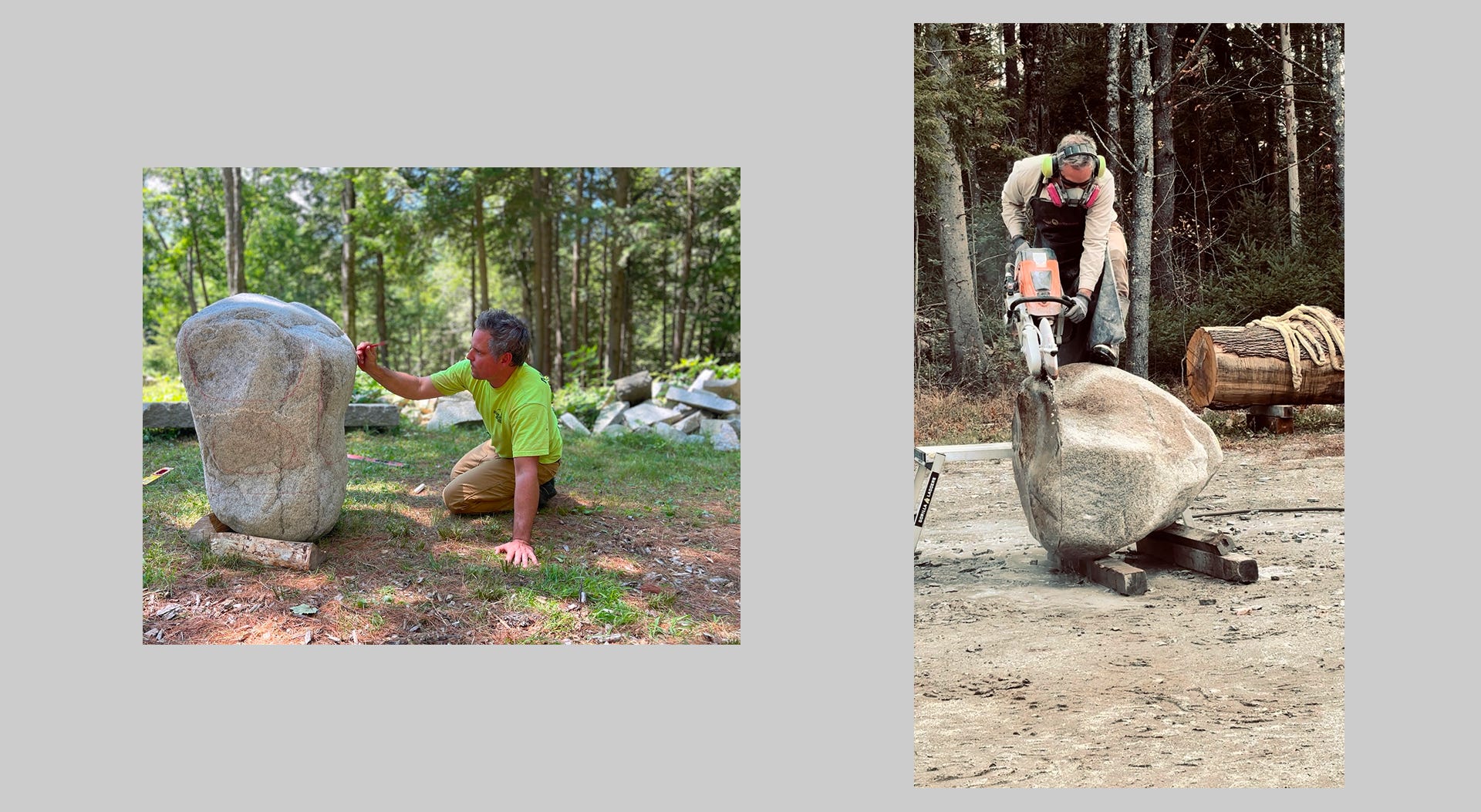
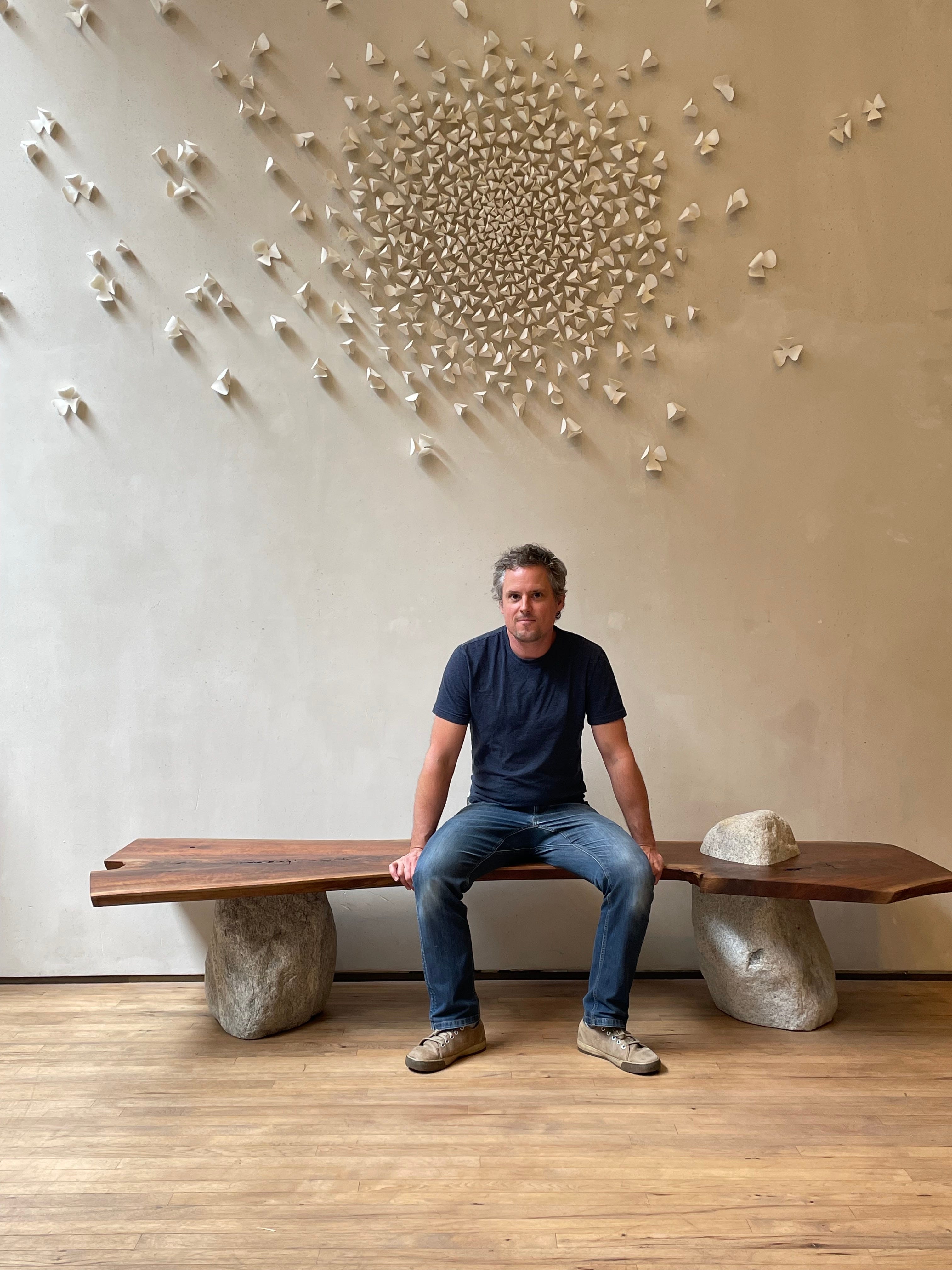
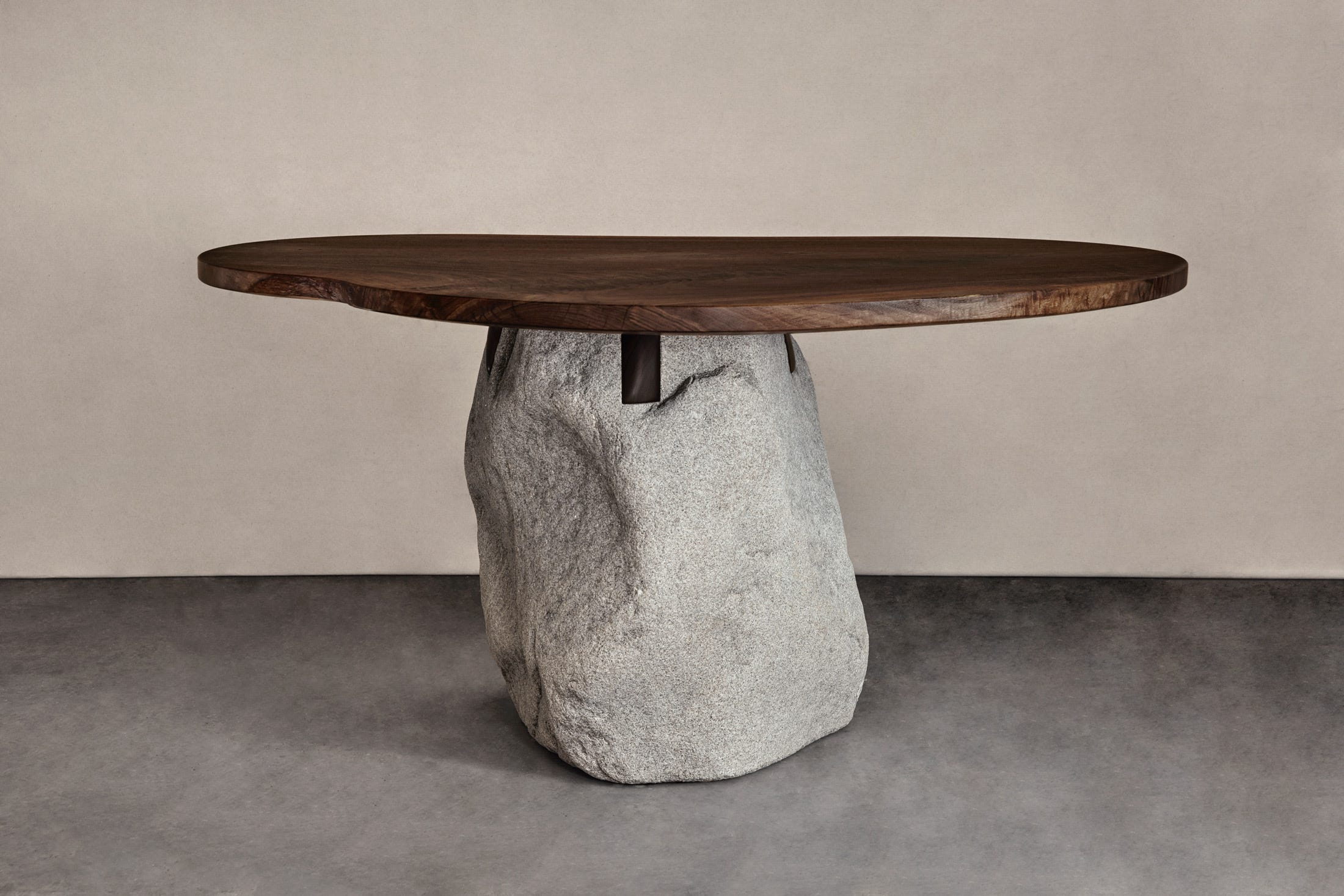
Stebbins is known for handmade objects that combine rough-hewn stones with wood elements, joined so seamlessly that the two incongruous materials seem fused into one. When he isn’t earning commissions from clients drawn to his now well-known benches, he contemplates the stones strewn about his five-acre property in Maine, considering how they will take shape. “I like to leave a little room to design as I go based on getting to know the materials,” he says.
He laughs at my suggestion that his work may be somehow keeping the flame of stonework alive. He describes to me over the phone how he pushes through his commissions so he can find novel forms, drawing pleasure from the risk of each bang of the chisel against the unforgiving canvas that is stone.
His designs are straightforward, yet beguiling, and he talks about his work without unnecessary abstraction. There is a conceptual depth to the pieces, though. Stebbins leaves some of the stone raw, heightening the contrast between the handmade and the natural. He is also a poet.
Stonecraft is an old art, and poetry, at least in its oral form, is arguably even older. These days, the former is carried out mostly with machines—lasers, water jets, and diamond-covered drills. The latter is constantly on its last legs, or so we read. Both speak to a sense of risk: for beauty, and stewardship of tradition despite the forward march of technology. But Stebbins’s stonework is certainly not an exercise in futility. Citing an unwillingness to pursue poetry into academia, he has found success in his stone carving and just completed his second solo show, “Dichotomies,” with no-joke Manhattan gallery Les Ateliers Courbet.
Though he says he resists the “working-class poet” vibe and doesn’t write about working with stone, there are conceptual links between the two crafts—mainly their exacting nature. “I’m drawn to the precision of language and poetry, and the precision of joineries in stonework,” he tells me.
He sees the work ethos, too, as an overlap. “I think being a writer for so many years and having to be a self-starter and self-motivated—that crossed over into what I’m doing now. You don’t know if it’s going to succeed or not, you just get up and put your head down and work.”
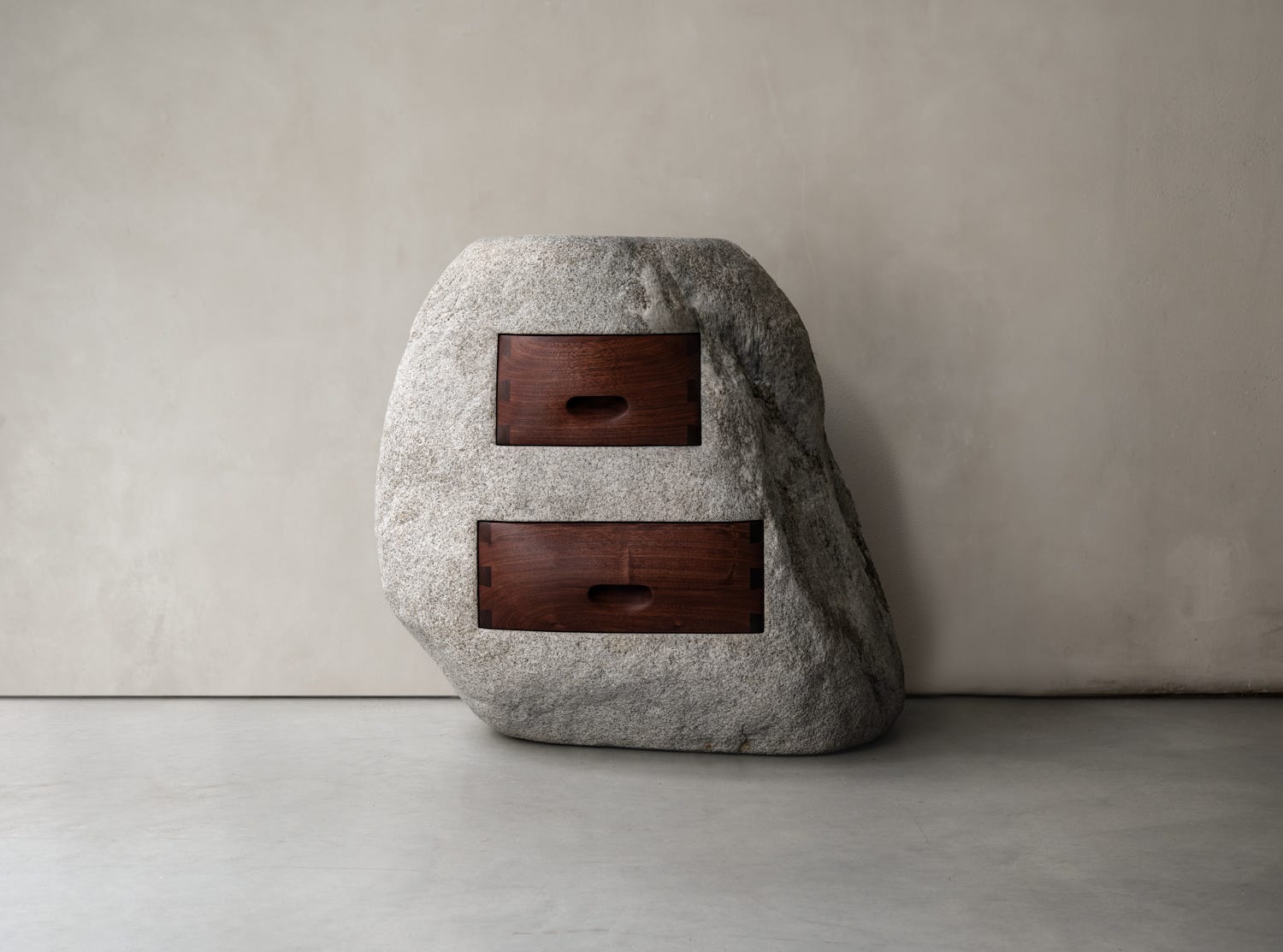
Stebbins’s monuments are informed by the modern sculptors who pushed abstraction back into the organic: Noguchi, Chillida, Hepworth. His use of architectural stone roots the practice in a dialogue with—rather than domination of—natural materials. Sometimes moving the stones from one place to another is half the battle. “There’s a lot of work that goes into just acquiring these things and moving them,” says Stebbins. “So you want to be fairly certain you could use it for something.” He finds stones locally, sometimes in nature, but also in the plentiful granite quarries of Maine.
Stebbins sees inspiration in the work of the Inca, whose stonemasonry is still, in many ways, unparalleled. He’s quick to mention the fact that many of the structures were made by now-forgotten laborers who gave their lives for the posterity of what they built. Stone is the bearer of some of our most ancient stories, holding traces of the hands that carved them millennia ago.
Stebbins seems shy about carrying that legacy, preferring instead to focus on his admiration of craft, in the ways of seeing stone relayed through the ruins of the past. This dialogue never stopped and continues to call people who can see the seams of meaning running through stone and speech.
We don’t see the trope of the art-romantic as much anymore. It seems as though it’s quite difficult to make young people care about anything at all—but that may just be how folks recently cognizant of their own distance from youth always feel about the young. Maybe that comes from decades of grinding ambition down to fit into the presets of relentless productivity.
Today, much of the economic value in a piece of art, design, or craft exists precisely because of the time it takes to make. People are essentially buying a crystallization of labor—hundreds of hours spent making a piece; the millennia spent forming and weathering rocks. But beyond the market value of this time, there is a sense of story behind the stones, their gathering, the randomness of a human finding it, spending weeks or months with it, and then, of course, the intense work of the completion.
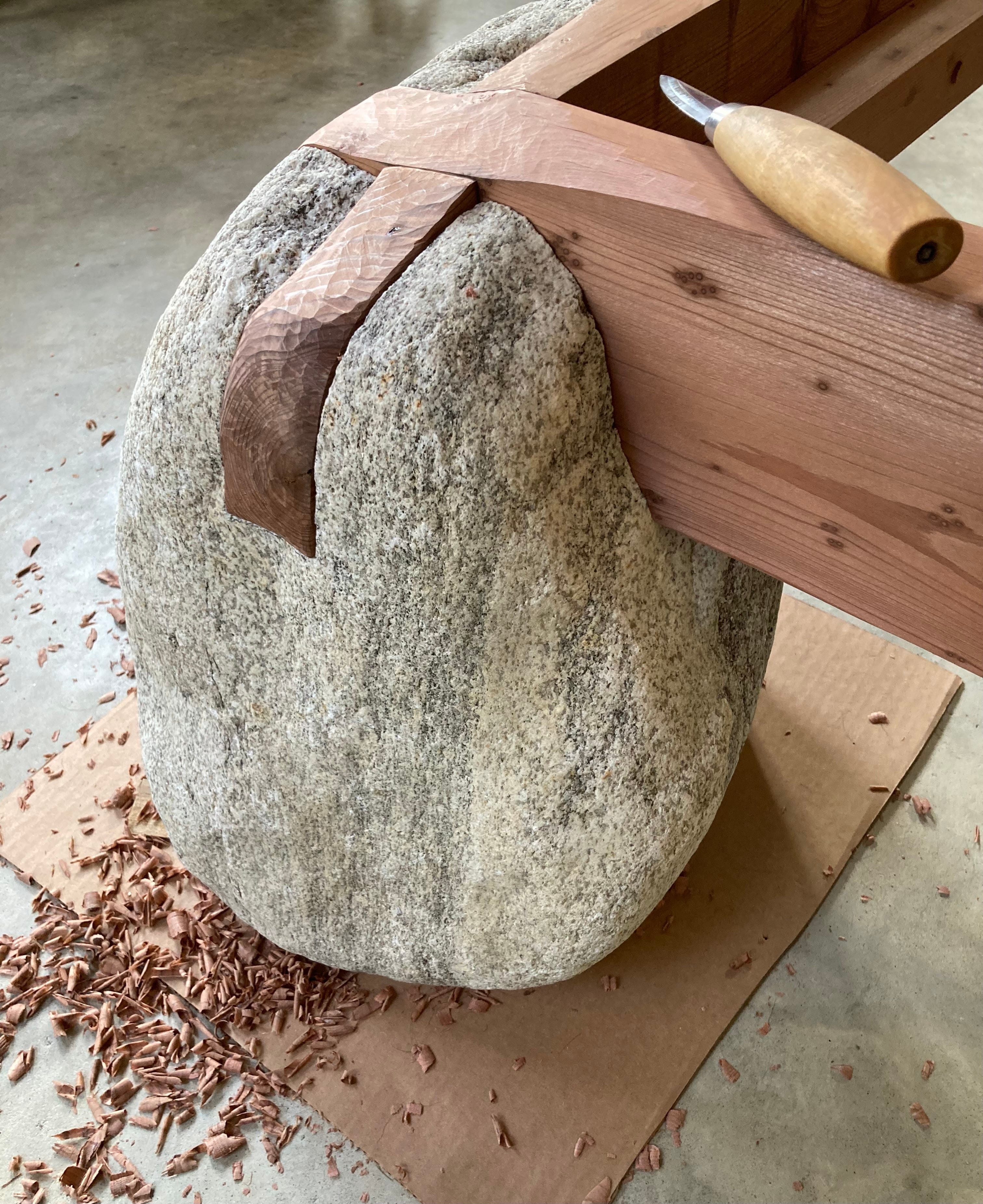
While carving by machine might be the norm for many, Stebbins’s method—“laboring over a stone over many days, and gradually seeing it take form”—has its own rewards. “A lot would be lost if I did it another way.” ⌂
Ben Dreith is a writer and editor living in New York. He is the US editor for Dezeen and co-runs the design Substack Extruded.
FROM THE ARCHIVE
PAST ISSUES
ISSUE 01: FINE, I’LL DO IT MYSELF ⌂ ISSUE 02: NO THOUGHTS, JUST VIBES ⌂ ISSUE 03: DON’T SIT ON THAT! ⌂ ISSUE 04: HOLIDAY SPECIAL ⌂ ISSUE 05: SWEATIN’ THE OLDIES ⌂ ISSUE 06: KITCHEN SINK ⌂ ISSUE 07: HACK JOB ⌂ ISSUE 08: OUT TO PASTURE ⌂ THE SHOE REPORT: MILAN DESIGN WEEK ⌂ A NYCxDESIGN CHORUS ⌂ ISSUE 09: GETTING WARMER
How Abigail Castañeda Contains Her Creative Practice

The self-taught woodworker shares her rituals, rules, and priorities. // Text and photos by Alex T. Williams
This work is amazing.