


This is the third story from our 12th issue, themed “THE AFTERLIFE.” Also in this issue: Are Those Skeletons in My Closet?, Against the Plastic Skeletonization of Halloween
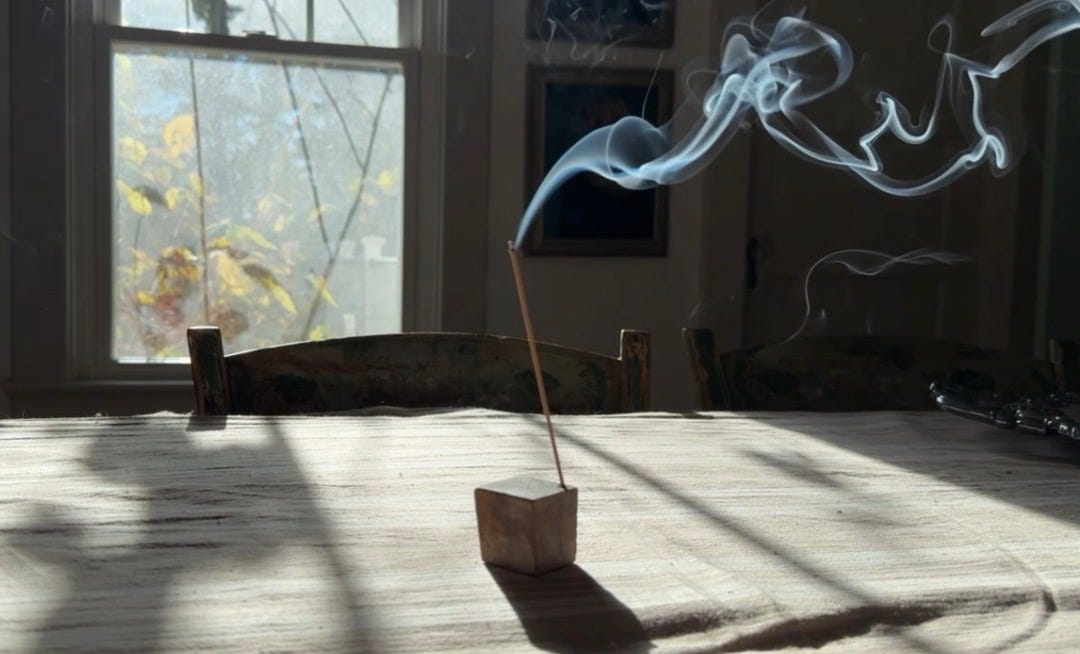
By Lila Allen / Sponsored by Ask the Ages
Sometime in the last few years, there was a serious vibe shift in the world of home fragrance. Maybe you’ve noticed it, too—suddenly, incense is everywhere.
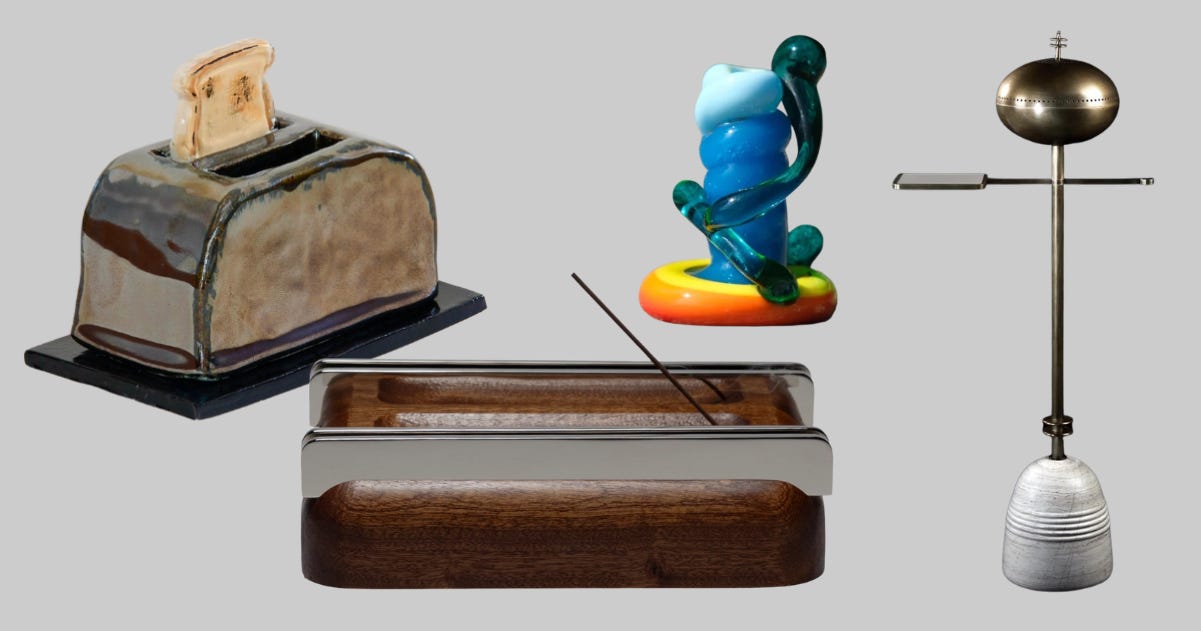
And not just incense, but an entire ecosystem of products around it, too. Earlier this year, home-goods dealer extraordinaire Lichen held its “Up in Smoke” exhibition, displaying a few dozen incense holders by designers like Sonny Han, Katachi Studio, and Outgoing. Apparatus recently unveiled “Standby,” a smoking table “for items that smolder.” (Let’s not overlook the obvious here—the smoke factor of other substances may have something to do with the rise of incense, too.) Australian ceramicist Slow Burn seems to sell out of their pool shark and “fart guy” incense burners faster than I can add them to my cart. Sugihara Fine Furniture’s incense column remains on my wish list in 2026 (since apparently none of you took the hint from the Wrong House Gift Obligation Index last year!). And on a slightly kitschier, maybe-it’s-just-me note: I’m also quite charmed by the emergence of traditional German smokers I’m seeing in holiday decor.
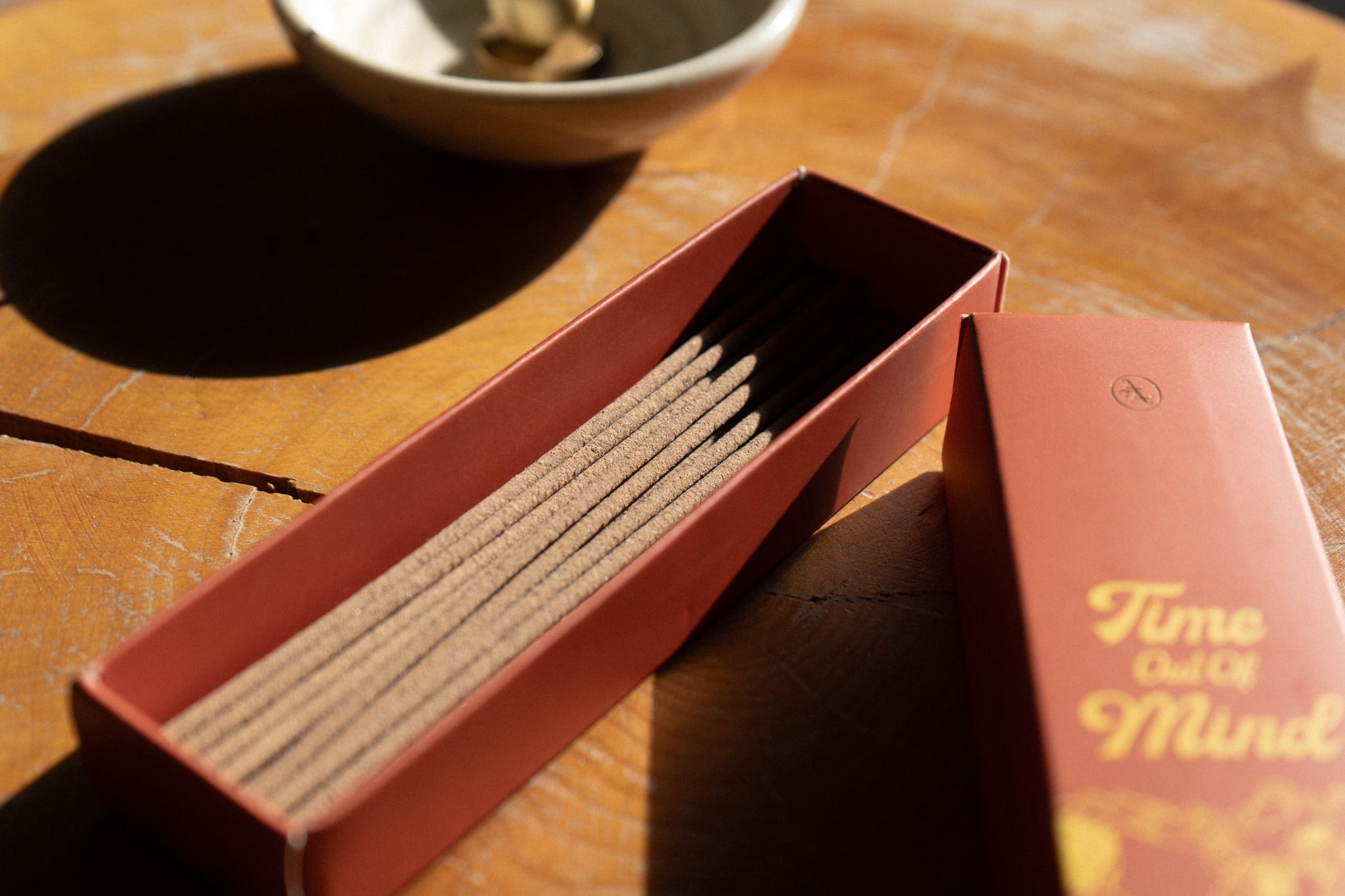
As a major booster of this movement, I was delighted to learn that an old colleague, Aaron Britt—long ago of Herman Miller fame, and more recently the publisher at The Midcoast Villager—had started up an incense biz with his friend Josh Builder, with creative direction from Ethan Mitchell. Called Ask the Ages, the brand started by way of Aaron and Josh’s radio show on WRFR, a station out of Rockland, Maine. Naturally, the vibe is pretty groovy: Their in-house line borrows its naming from favorite albums by Bob Dylan and the Velvet Underground. (The latest addition to their lineup, the wood-forward burn Time Out of Mind, riffs on the former’s 1997 comeback album.) In addition to their own scents, they also carry a well-curated assortment of sticks and cones by makers like Zouz, Kyukyodo, and Kousaido.
I caught up with Aaron to talk all things incense—from artisanal backyard blends to the best ways to burn it.
⌂ ⌂ ⌂
Like what you see here? Want to support independent design media? Wrong House compensates its contributors, and your support goes directly toward producing more stories. Please consider becoming a paid subscriber.
As a recent convert, I’ve got to say: Lighting a stick of incense first thing in the morning is a game changer. It gets you in your body, and for me, gets me out of bed—particularly when it’s cold. It’s really grounding, especially when the alternative is, like, rolling over and looking at your phone.
Incense is like a force field from my phone. There is something about having that little smolder, right, and having this perfumed space—it creates this atmosphere, where it’s like, wait, who’s playing Monday Night Football? These things do not go together. Once the incense is going, then it’s like, who’s gonna play a board game with me? What am I gonna read? It gets more sacred around the house when the incense is burning, and it’s an incredible tool to both alter the space and give you a hit of what you need. And I find in some cases, it prevents me from [indulging in] some shitty habits.
I think there’s actually a pretty neat parallel between a record and a stick of incense. We’re up against the endless scroll—a nonstop digital environment. There’s a finite measurement of time baked into a stick of incense, versus a jar candle you light and forget about that burns for 30 hours.
We call it Incense Standard Time. Incense is amazing for many reasons, one of which is that it can be a kind of clock, right? A lot of sticks burn for about 20 minutes, give or take. That is about the length of [a side of] an LP. You can sync them up. You can basically replace your industrial sense of time with something that is much more horticultural in scale.
Way back when, incense was a timer. They would make incense ropes, and I’ve read stories of incense ropes that you would then burn and put between your toes, and as you began to feel the heat, time was up.
That was in an era where perhaps you had less precise timers available to you, but nonetheless, it’s great in my household. A stick of incense is usually what it takes to play a couple of games of backgammon, or get into the book that you’re reading long enough for it to start to hum.
There’s something special about it being ephemeral, right?
And potent for that time. And then it fades. With a candle that you light and forget about, there’s a low-level perfuming of the space. With incense, there’s a spark—you get something intense, and then it fades away.
What about storing incense? This is an issue I’m currently facing. What’s your strategy for storing and displaying?
You’re not burning fast enough. I’ve got a very nice pair of floor speakers, so I have a bunch of incense on top of those. I tend to burn in the living room, and I’ve got little statues and figurines collected over the years—these bronze swans I picked up in Morocco years ago, funny little fucked-up dishes my kids made when they were in the third grade. I use those as my ashtrays. I have a drawer where I keep a bunch of incense in the dark. I have between eight and 10 boxes banging around, and I’ll get excited about one, and then another will feel like the right moment.
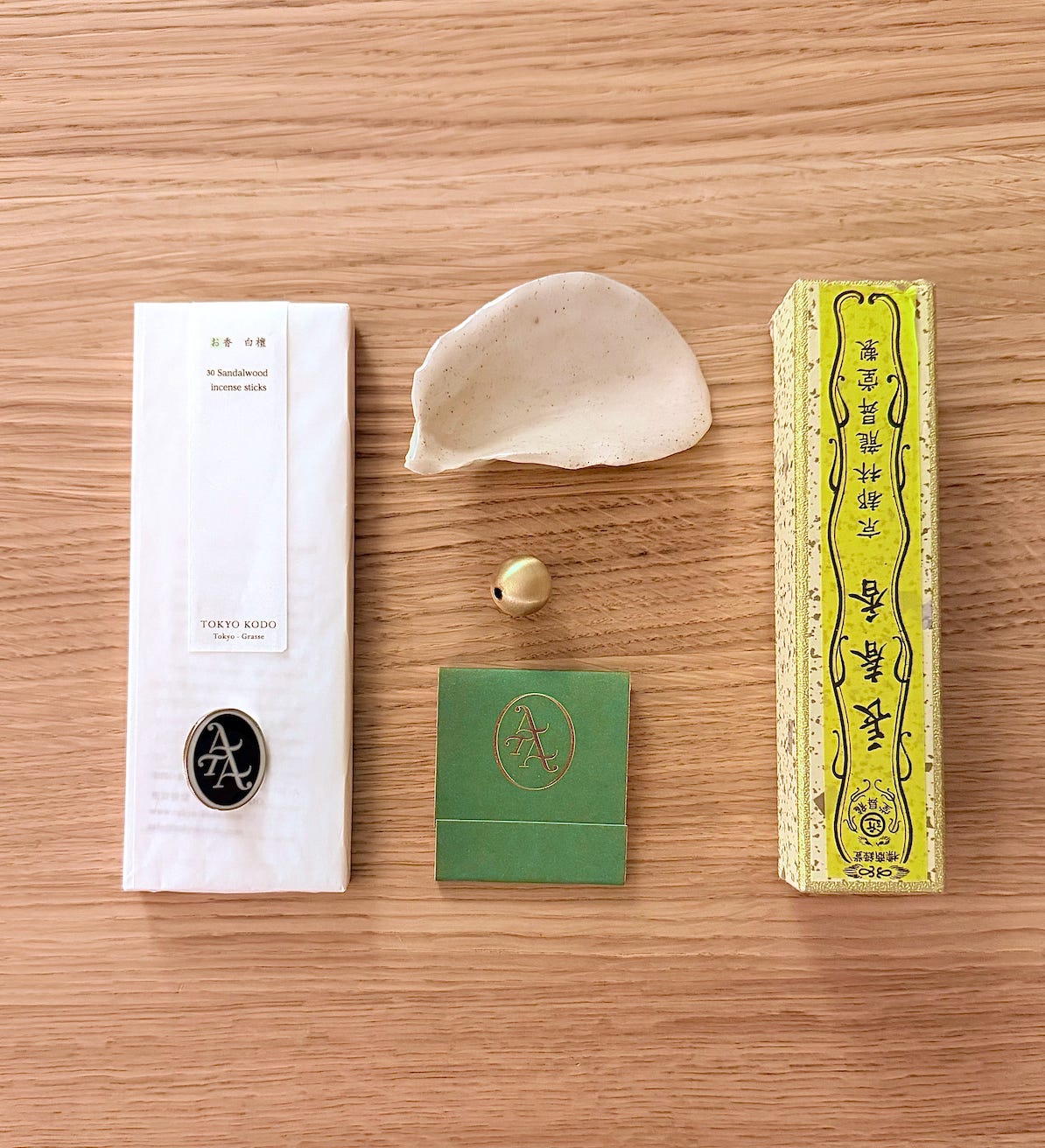
We sell from this brand called Tokyo Kodo, which is some of the nicest, most amazing stuff. It’s 50 bucks a box, with 12 sticks in a box. That’s the closest to true art incense that we’ve come across. That can be something where it’s like, let’s burn one of these and really set the tone. And then I’ve got some sweet, woody sandalwood that’s a daily driver, and the box that I picked up in Tokyo has like 200 sticks. That’s one that’s easy to throw on, let it rip, and go on to the next.
Help me understand: What makes a box of incense $50 versus $20?
The couple who make Tokyo Kodo are both highly trained parfumiers. She’s the perfumer, and he built the machines that they use to make this incense in a little studio behind their house in Gunma Prefecture. In their case, it’s really high-end ingredients, and it’s about as handmade as you can get. I mean, one of them has ground-up crystals. What they’re doing is totally on another level from industrial manufacture.
Awaji Island is the home of most Japanese incense making. We visited a couple of factories, and what we saw was a mixture of handmade and machine-made. They had many machines, and like two guys working the paddles, making the dough, and sending it through the extruder machine. You’d call it a large cottage industry, and then it goes up from there. When you get to these big brands like Shoyeido and Nippon Kodo, they’re making big industrial incense. So part of what makes the $50 box is the fact that you’ve got this rad artisanal incense made in the backyard.
I’m curious—is there a movement within the incense community to advocate for the handmade stuff versus the machine made? Or is everybody friends?
The incense industry in Japan is a bit like wine in France. You’ll find people who are into that, but you also have an incredibly robust market for it domestically, in the way that everyday French people drink astounding six-euro wine. And then you can go high-end and artisanal from there; you can have micro-vineyards.
When you see a Western brand with a line of incense, it’s almost guaranteed to be a white-label job produced on Awaji Island by this consortium of incense makers that we went to visit. And it was one of those things where they’re like, ‘You can’t tell anyone, but we make incense for blah blah blah.’ So that was actually very revealing from an industry perspective. So I would say that what feels special and artisanal in a shop in Brooklyn is less than you would think, and certainly not to the tune of what this couple is making in their backyard.
Does incense have terroir?
The quality of the wood certainly matters. The best agarwood—which is also known as aloewood, which is also known as oud—comes from Vietnam. There’s certainly a premium paid for Vietnamese aloe wood. Sandalwood is more common throughout Asia. Hyungi forages for botanicals; she works out of Los Angeles, and we carry a couple of her incense. One’s called Terra; another is called Dune, which smells like the high desert in Southern California.
We’ve talked about Japanese and Eastern incense traditions, but I assume incense exists in other geographies too. The Catholic Church, for example, uses incense. Have you explored incense traditions outside of Japan?
Certainly—in Latin America, palo santo would be a scent that a lot of people are familiar with, even if they don’t know the name. We sell one palo santo incense that is actually produced in Tibet, but it’s really nice if that’s the scent that you’re looking for. Generally speaking, I think we’re more attracted to the sandalwood, oud, camphor, and eucalyptus over palo santo. But it’s an incredibly popular scent and one that you smell all the time.

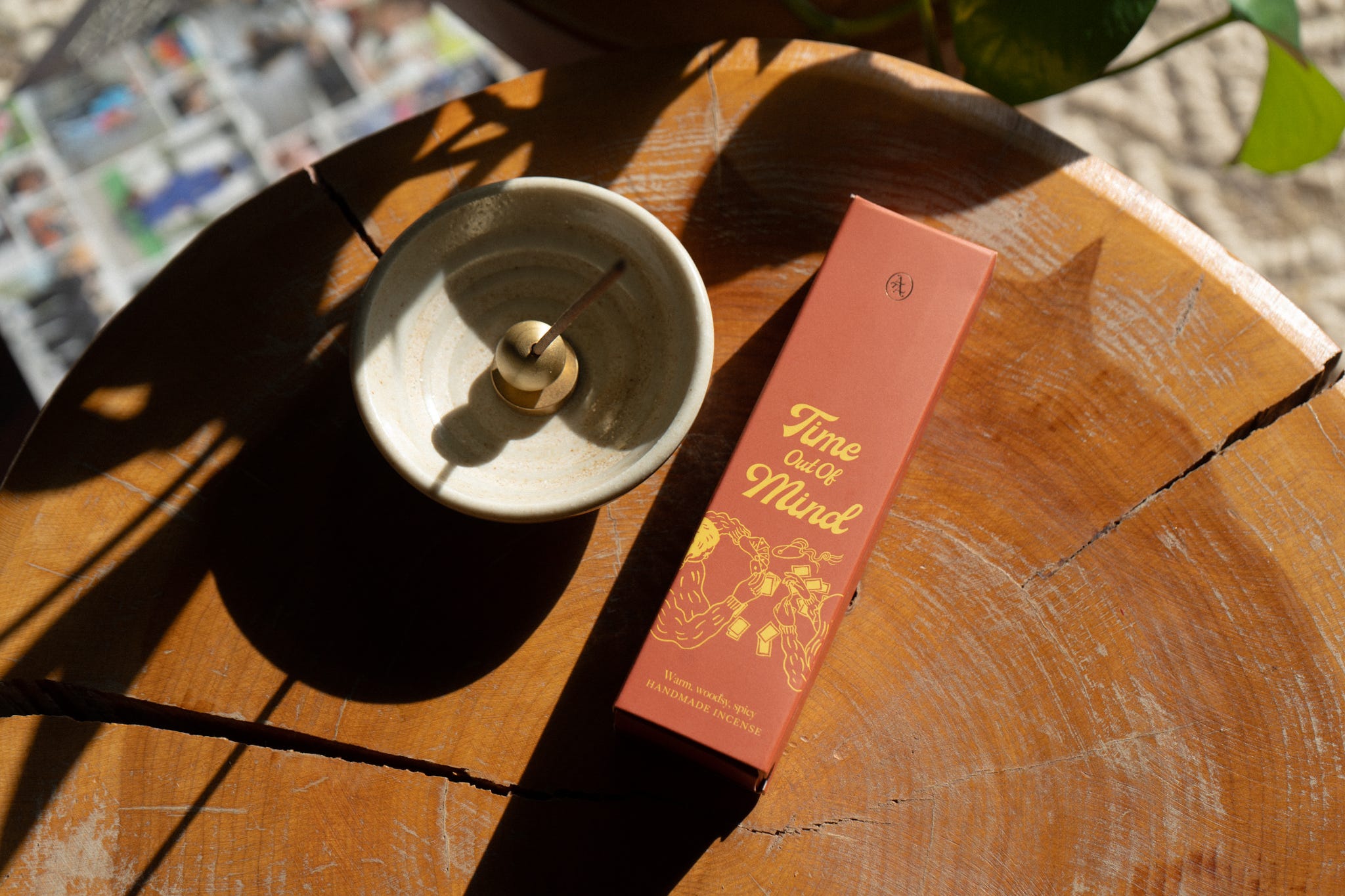
Can you tell me a little about the new scent you’ve just released, Time Out of Mind?
We’ve arranged with our partner Hyungi to do four custom scents for us. One of them is White Light / White Heat. And this next one is called Time Out of Mind. Ask the Ages began as a radio show. [Cofounder] Josh and I are huge music fans, and so each of the four scents is named for an album that we love. White Light / White Heat is obviously the Velvet Underground. Time Out of Mind is Bob Dylan’s comeback record from the late ‘90s—also a Steely Dan deep cut off of Gaucho. I know the heads out there will be splitting hairs over which “Time Out of Mind” this actually refers to. But this new one is much more of an autumnal scent.
Yes, White Light / White Heat feels very spring/summer, at least to me.
Yeah, we imagine that as a summer burn. None of this is a perfect heuristic, but the seasons are points of inspiration for us—thinking about what they smell like and what they conjure, what you want to be doing in your space. And we have these four activities that we’ve pinned the brand to: creating, relaxing, meditating, and gathering. We might recommend a certain incense for meditation—if that works for you, fabulous, go crazy, bro. If it turns out what we think of as a meditation incense makes you want to party, then party, bro.
It’s all about what experience this incense is facilitating for you. That disclaimer aside, we definitely wanted to put out something autumnal. The major notes that you’re going to get in Time Out of Mind—the woods—are a blend of hinoki, camphor, eucalyptus, and pine. You’re getting rich forest, clove, frankincense, musk, and lighter notes of cypress and sandalwood. It’s like forest plus spice. Part of what we wanted to do is create an incense that gets you in a place where you want to gather, hunker down, have people over. And you’re also going to burn it at night once everybody goes to bed because it just smells so damn good, and you’ve stolen an hour of reading time. It’s just yours.
I’m curious about incense burners—I know you sell a few on your site. Are there plans to develop more? Are there certain vendors out there that you really love?
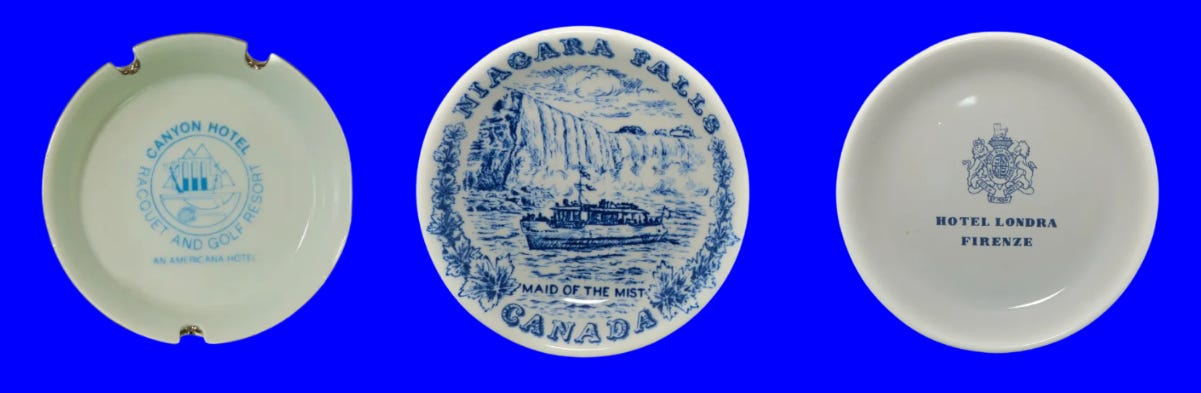
We love the vintage and the offbeat—like, a trinket tray from a Milanese hotel is great. When we’re in Japan, we’ll cruise through flea markets and find charming, weird little dishes. I trawl eBay, go to the antique stores. We’ve talked about developing a burner with a couple of local ceramicists in Maine—that hasn’t gotten off the ground, but it’s very much an ambition. I’ve seen custom jobs online and some of them are like 250 bucks. But for me at least, I like to get a really big oyster shell, and use that as my ashtray. I’m all about the utilitarian—the weirder, funkier thing you found is more appealing to me.
Very Wrong House of you.
Hell yeah. More and more, I wish we had kept every lamp when my wife’s grandmother passed away. That’s what I want all the time now. ⌂
This interview was edited and condensed for clarity and length.
Lila Allen is the editor in chief of Wrong House.
FROM THE ARCHIVE
PAST ISSUES
ISSUE 01: FINE, I’LL DO IT MYSELF ⌂ ISSUE 02: NO THOUGHTS, JUST VIBES ⌂ ISSUE 03: DON’T SIT ON THAT! ⌂ ISSUE 04: HOLIDAY SPECIAL ⌂ ISSUE 05: SWEATIN’ THE OLDIES ⌂ ISSUE 06: KITCHEN SINK ⌂ ISSUE 07: HACK JOB ⌂ ISSUE 08: OUT TO PASTURE ⌂ THE SHOE REPORT: MILAN DESIGN WEEK ⌂ A NYCxDESIGN CHORUS ⌂ ISSUE 09: GETTING WARMER ⌂ ISSUE 10: HOLDOUTS ⌂ ISSUE 11: HOME ECONOMICS
A Room Should Make You Feel Something

Winter is coming, y’all. Your SAD lamp unfortunately can only get you so far. So why not lean into ambience and big moods this season?