


This story is from our 10th issue, themed “HOLDOUTS”—about the things we hold onto, and hold out for. Read the editor’s note here.
Also in this issue: “You Have to Give Up What You Have to Get What You Need,” by Jesse Dorris; “Working with Stone, Ethan Stebbins Finds the Seam,” by Ben Dreith; “How Much AI Can You Take?” by Elizabeth Fazzare.
Hey there, housemates,
Fifteen years ago, the writer of today’s story, Matt Cosper, and I shared a drink at a beloved local watering hole in our hometown of Charlotte, North Carolina. At the time, not much was around it: A pawn shop was just up the block, and a new record store had opened nearby. By the time I moved to New York a couple of years later, development was creeping down the street. Condos were moving in, and the artists were moving out.
But this bar, The Thirsty Beaver Saloon—which served a drink called a “Thirsty Beavosa”1 for 50 cents—ultimately became the unlikely protagonist in a David-and-Goliath battle for the soul of the city. Below, Matt walks us through its history, reflects on how its holdout status has changed it over time, and talks to a few of its patrons. (Mick Jagger, sadly, could not be reached.)
Til next week,
Lila
1 Miller High Life—the “Champagne of Beers”—and orange juice.
⌂ ⌂ ⌂
Like what you see here? Want to support independent design media? Wrong House pays its contributors, and your support goes directly toward producing more stories. Please consider becoming a paid subscriber.
Written by Matt Cosper
There are dive bars and there are dive bars. Most of the proper ones aren’t places you want to be unless you are a committed alcoholic or member of the criminal underworld. My hometown of Charlotte, North Carolina definitely has some dive bars—nasty little spots tucked away at the edges, hidden in plain sight: places like The Surf Inn, a Lynchian pool hall incredulously nestled between a nursing agency and a concrete supplier. But in a city that has boomed on the back of vast banking interests and the transplants they hire, local color can be hard to find.
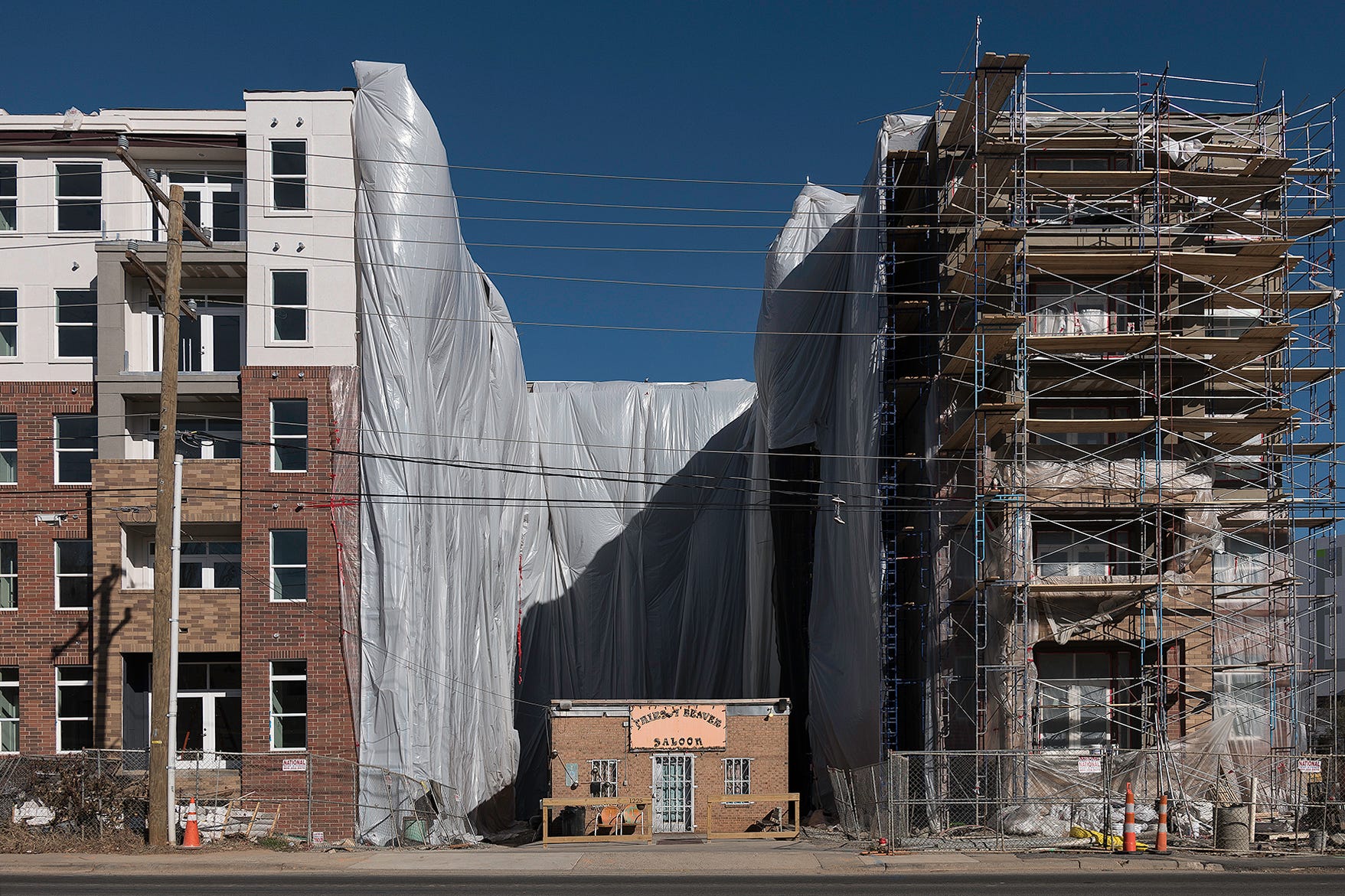
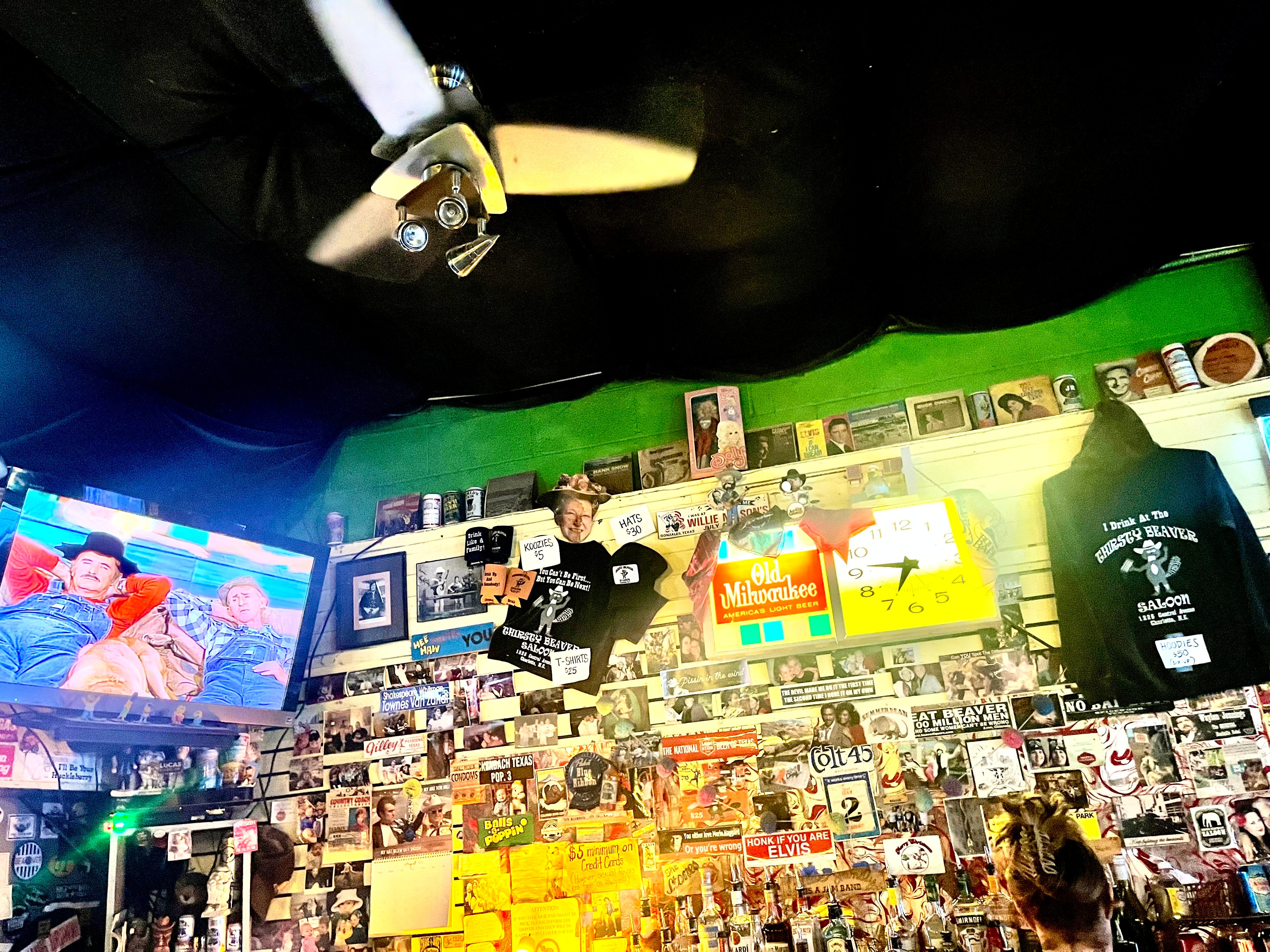
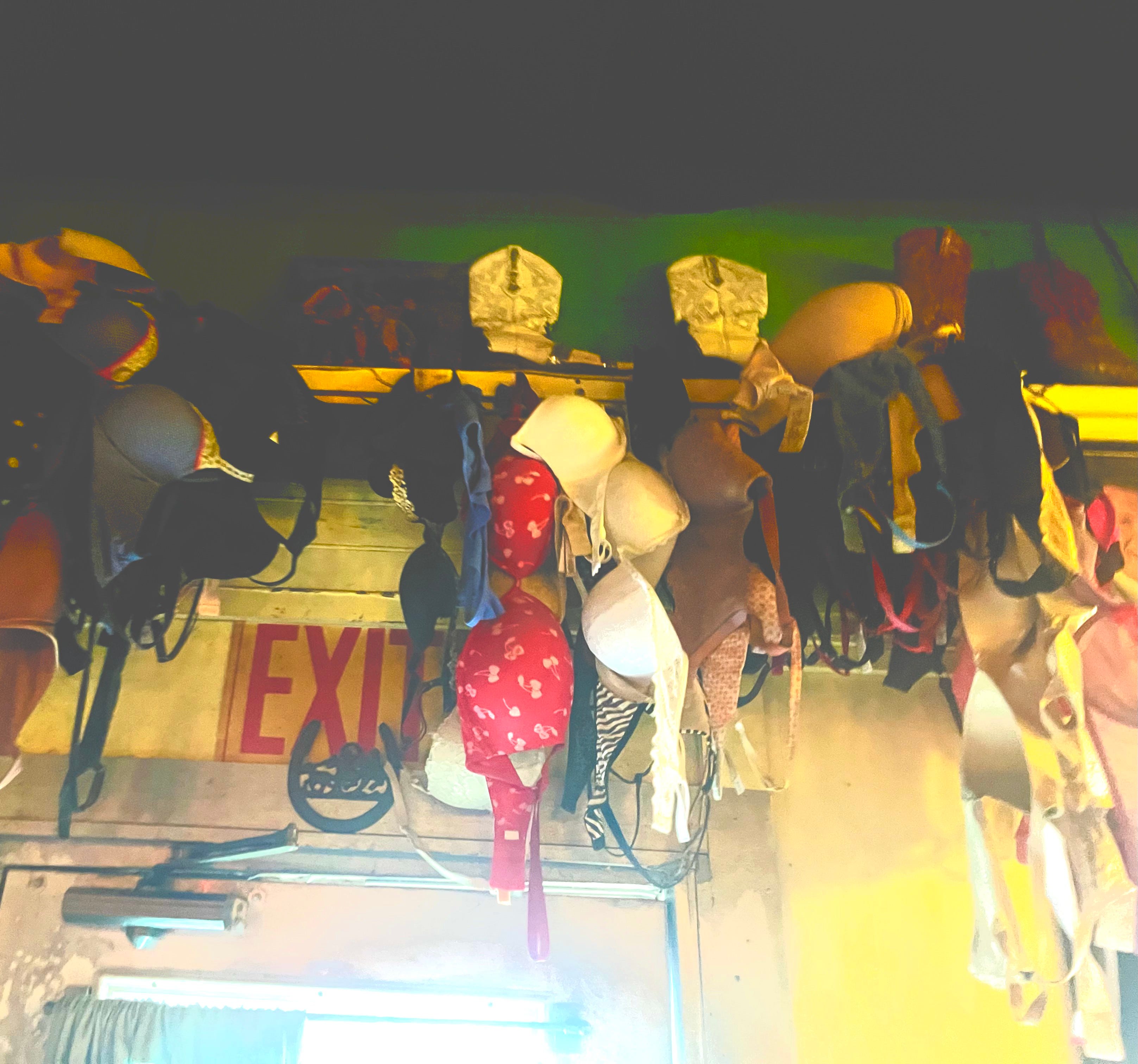
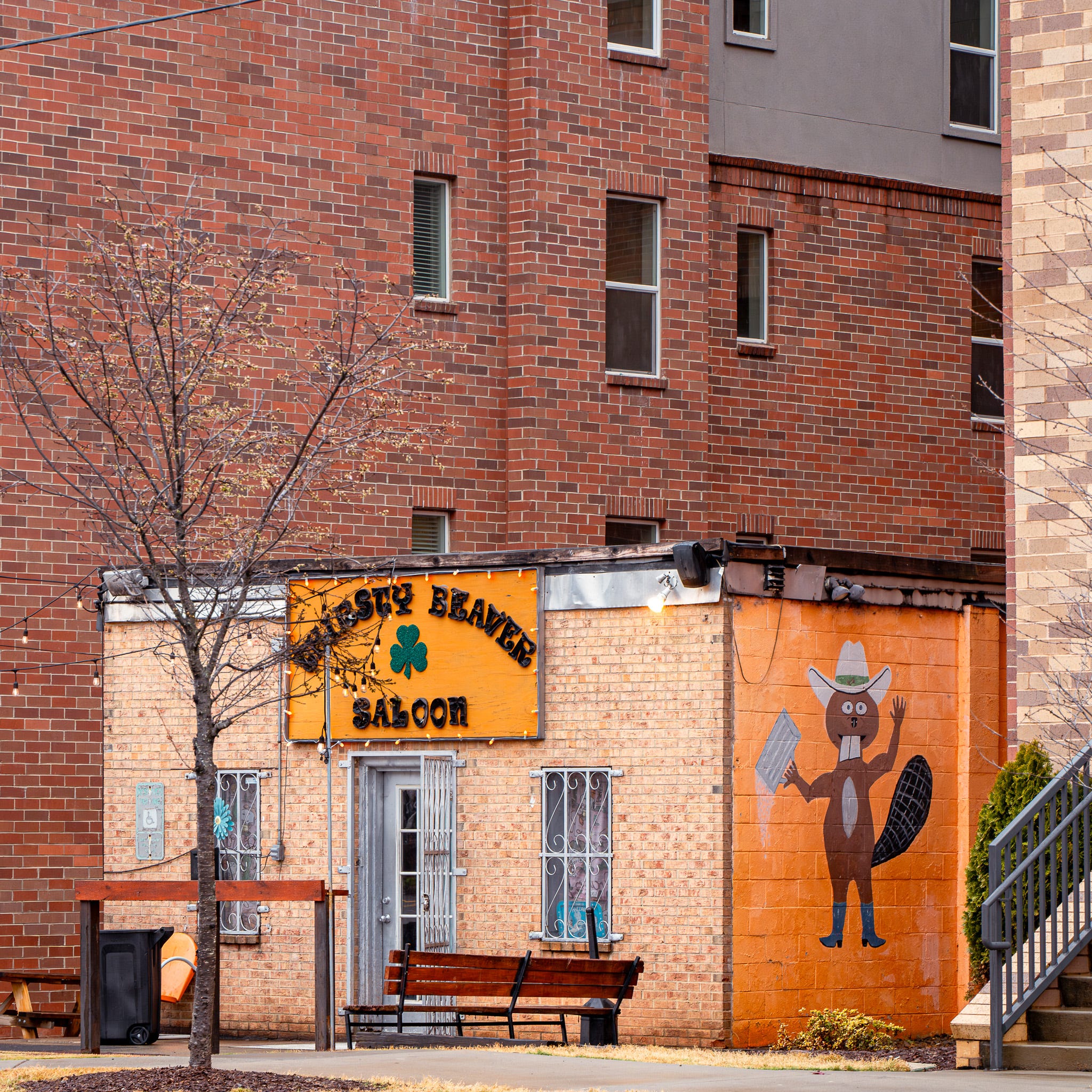
If you ask your average Charlotte resident to recommend a dive bar, they are going to point you to The Thirsty Beaver, an austere cinderblock structure on Central Avenue that has been there since 2008. There are bars on the windows and no landscaping; bras hang from the ceiling and beer memorabilia covers the interior, chockablock and messy. “Hee-Haw” plays on TV. On the building’s side—which is painted orange—a supersized beaver mascot in a cowboy hat raises a glass (presumably of the tavern’s beer, which starts at $2). But the story of the Thirsty Beaver is interesting mostly because it hinges on the strange mutations that can arise when the dictates of capital collide with local weirdness at the end of the world, because around a decade ago, a luxury condominium called Overton Row was forced to build around it.
In the 2000s, brothers Brian and Mark Wilson initially staked a claim and gathered a little community around The Rat’s Nest, a vintage clothing store where they trafficked in wares that signaled a post-ironic devotion to old-school outlaw country and motorcycle culture. They sold clothes but also hosted tintype photographers and musical acts—including their own band, The Loose Lugnuts—and drank a lot of beer. A bar made sense.
When it opened 18 years ago, the Beaver quickly established itself as an outpost of no-frills cool in a not-quite-yet gentrified corner of the Plaza Midwood neighborhood, an undesignated arts district on its way to being the neighborhood it is today, where asking rents are the highest of anywhere in the city. Opening up in a dusty lot not surrounded by much, The Thirsty Beaver expanded the borderlands of Plaza Midwood and became a home away from home for a loyal crew of bikers, cow punks, and folks from the neighborhood who didn’t like staying home alone to do their drinking. The bartenders were friendly, the jukebox was better than it had any business being, and it was a nice place to hide if the vibes up the street were a little too coked out. It was authentic, you might say.
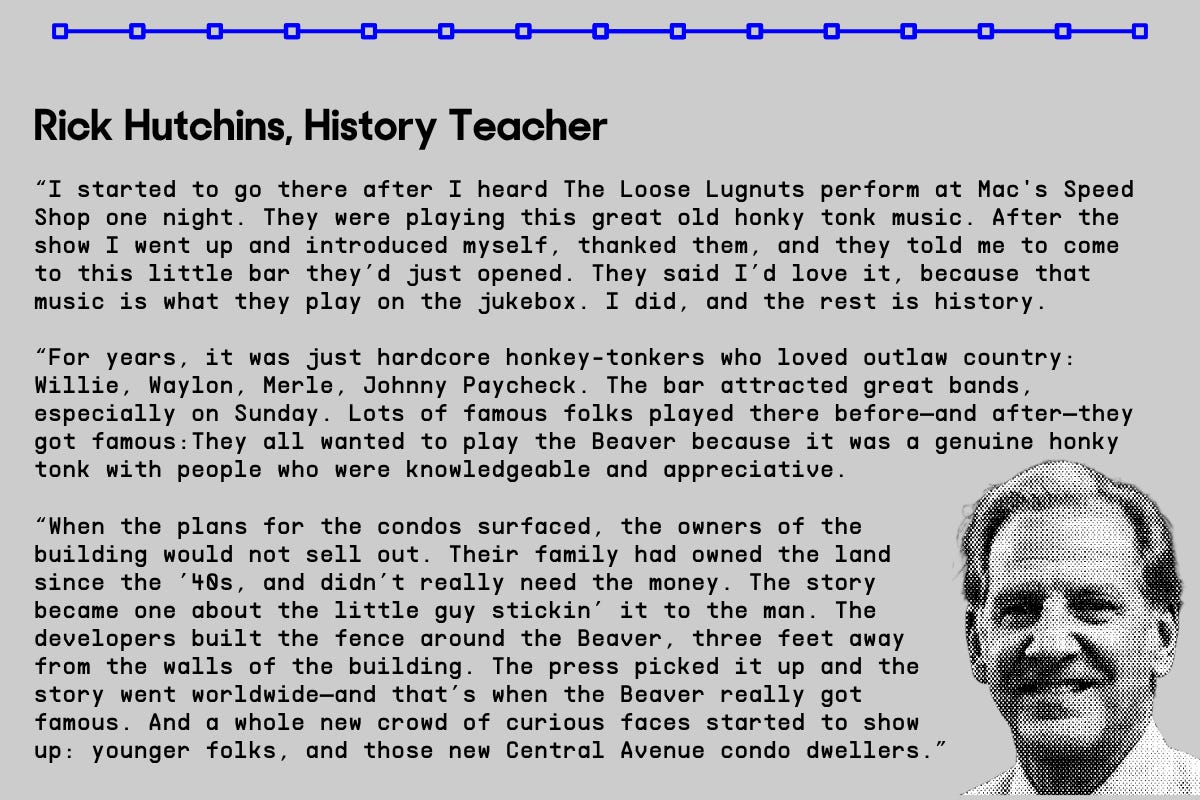
When developers started buying up lots in the area around 2012 or 2013, there was one holdout: George Salem, a local property owner who leased The Thirsty Beaver its land, had no interest in selling. Offers came and went but Salem wouldn’t budge. In 2015, CW Development came up with a novel solution: they bought up all the land surrounding the Beaver and turned it into Overton Row, a 323-unit apartment complex built in a sort of horseshoe around the bar.
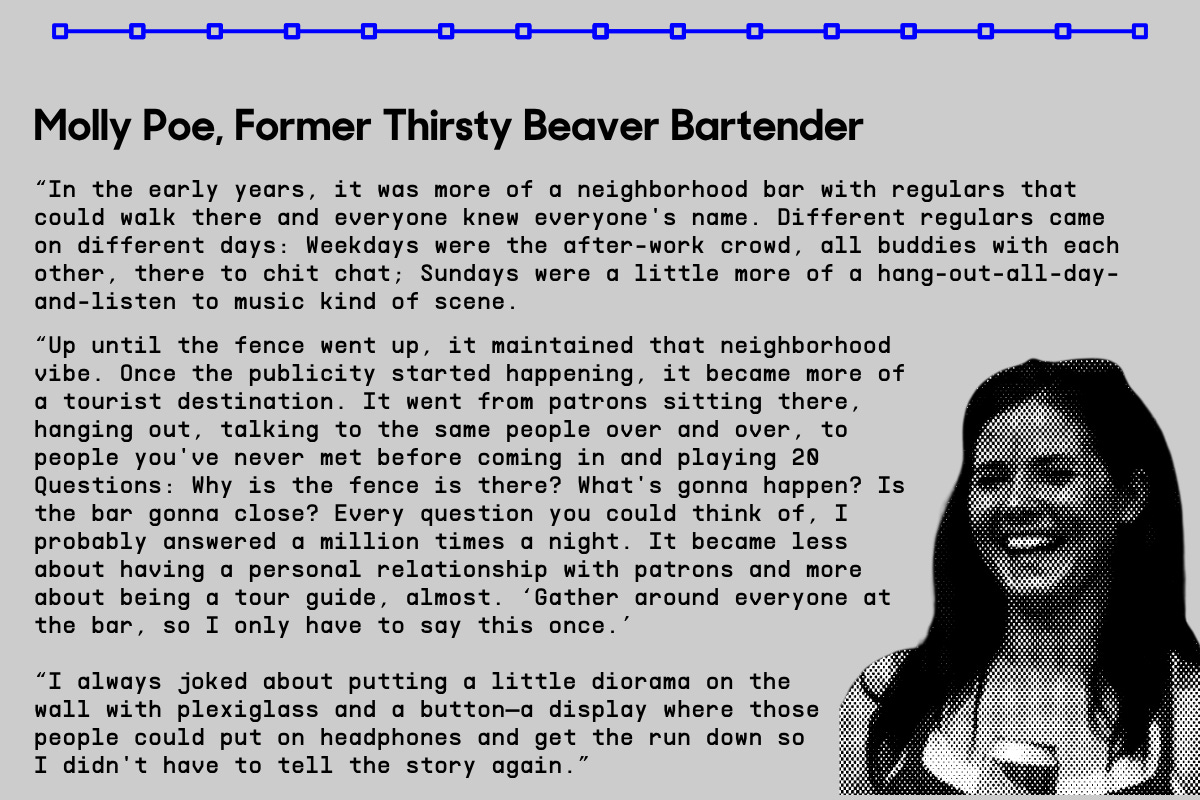
The drama around the land deal and the visual interest of the new situation was catnip for the media. In the years since, it has stayed a cause celebré for champions of the underdog and connoisseurs of architectural oddities. Mick Jagger posted a picture of himself drinking there undisturbed when the Rolling Stones stopped in Charlotte. The little dive bar that could has become what a dive bar cannot be: a tourist attraction. And in news that will surprise no one, that kind of attention has a tendency to change the vibe of a place.
The concept of psychogeography is simple: There are cities made of concrete and glass with human animals moving through them hither and thither. Woven through are secret cities—diffuse and mutable burgs constructed from habits, aggressions, eroticisms, and encounters, always in flux and contingent on the emotional and intellectual experiences of their inhabitants. This constellation of secret cities is more real than real. The psychogeographies of a place are its soul. And soul has long been a point of contention in conversations about Charlotte.
Built at a trading crossroads for Indigenous tribes and defined by banking activity for much of its history, Charlotte is a town whose soul has been caught up in facilitating the flow of capital. The city’s growth into a metropolis has proceeded with a sense of frictionless comfort, insulated from the murky past of the American South. But the past is never really dead; it’s not even really past. No matter how we try to tear down or paper over history, a specter remains, resulting in a sort of double exposure. In some places, the past peers back at us with no separation at all. The effect is unsettling.
This is where The Thirsty Beaver enters a sort of uncanny valley of nostalgia, progress, and the inexorability of change. In its aesthetic and affect—and by holding out against development—The Thirsty Beaver projects an image of nostalgia, facing off with the forces of so-called progress.
Whether you see this resistance as a noble act of preservation or a stubborn reactionary position, the fact of things is that it is an illusion. As our good friend Heraclitus reminds us: “All things flow”—which is, of course, anathema to beavers, who spend their entire lives dedicated to honoring an instinctual drive to impede flowing water. The symbolism works almost too perfectly. One wonders sometimes if the author of this Universe has no sense of subtlety.
Capital demonstrates its true genius in how it handles these places where the veil is thin. Rather than hide or mask these zones, the solution is a handy bit of necromancy, turning the ghost into a commodity itself. The Beaver is accessing a particular register of southern nostalgia: a blue-collar, redneck past that is hilariously out of place in the gentrified environs of Plaza Midwood in 2026. The bar was always a nostalgia trap—a temple to an idea of the South that likely never existed, at least not in such a concentrated dose. And given the way the neighborhood has changed around it, and the way those changes have contributed to the longevity of the joint, it’s hard not to see it as a sort of campy postmodern redneck theme park, the sort of thing that wouldn’t be out of place in Las Vegas, or in a district of Elon Musk’s fantasy of a Mars Colony.
The late great cultural critic Mark Fisher, quoting Italian anarchist philosopher Bifo Berardi, wrote eloquently about “the slow cancellation of the future.” This concept shows up tacitly in most cultural criticism at this point, nearly a decade after Fisher’s suicide: That there’s nothing new under the sun; everything is a remake, or a prequel or a spin off. Nostalgia is the primary form of expression and experience in a world where those in the driver’s seat lack a compelling or inspiring map of the future, or where the myth of a linear, positivist history has been debunked. We lean on hopes of getting back to some lost past, of being great again as we were in our golden age, or at the very least take comfort in old episodes of “Hee-Haw.” Nostalgia is cozy and comforting for some, but the problem is that it isn’t actually real. It’s a simulacrum, a copy without an original.
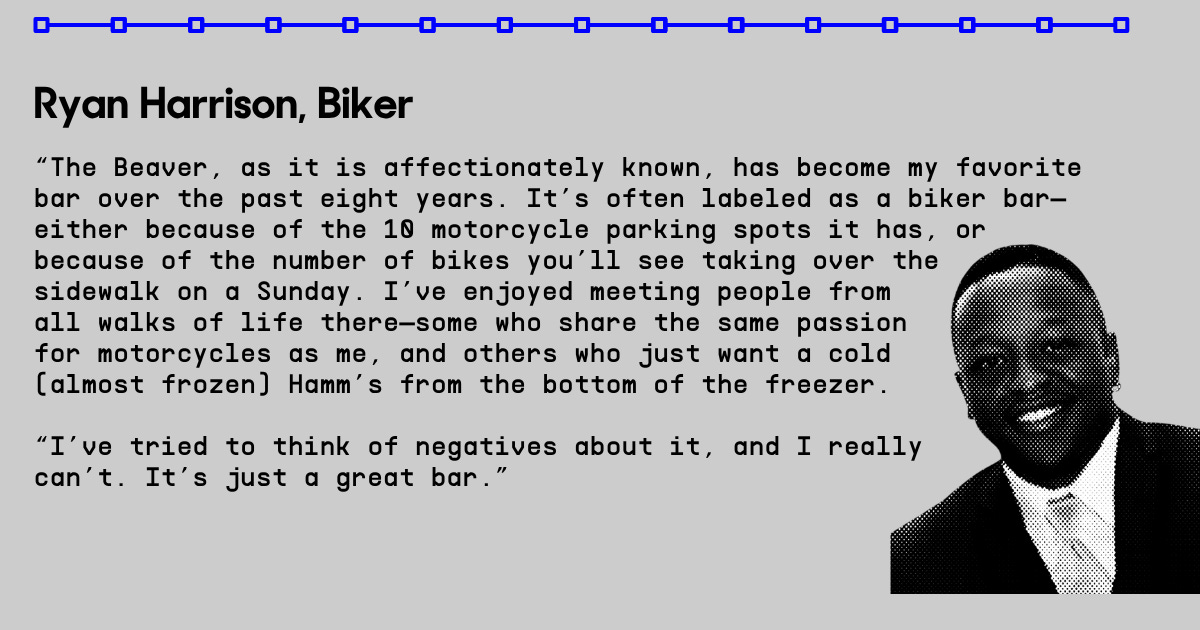
What is real are people. Culture is what people do in a specific place under specific circumstances. It’s how people are, in context. And to a lot of people, The Thirsty Beaver has meant more than any one image or idea or economic function. It’s the place they saw their mild-mannered coworker drink too much and holler along to Waylon Jennings, where they made out with their ex, because they are a messy bitch who lives for drama, where they got lost in the intensity of being a human being living a human life. Glory and regret in equal measure. These things are what make a city worth a damn. There aren’t many corners of the world left where people can be people. It can feel like that anyways. Regardless of the vagaries of the market, or the weirdness of trying to exist IRL at all, when a city spawns a spot like the Beaver, it’s worth fighting for. And the best way to do that is probably to put some change in the juke box, grab a seat at the bar and tell the bartender your name when you order. ⌂
Matt Cosper is a playwright, poet and critic who lives and works in Charlotte, North Carolina. Someone should publish his debut novel, Idle Hands. It is quite good.
FROM THE ARCHIVE
PAST ISSUES
ISSUE 01: FINE, I’LL DO IT MYSELF ⌂ ISSUE 02: NO THOUGHTS, JUST VIBES ⌂ ISSUE 03: DON’T SIT ON THAT! ⌂ ISSUE 04: HOLIDAY SPECIAL ⌂ ISSUE 05: SWEATIN’ THE OLDIES ⌂ ISSUE 06: KITCHEN SINK ⌂ ISSUE 07: HACK JOB ⌂ ISSUE 08: OUT TO PASTURE ⌂ THE SHOE REPORT: MILAN DESIGN WEEK ⌂ A NYCxDESIGN CHORUS ⌂ ISSUE 09: GETTING WARMER
